
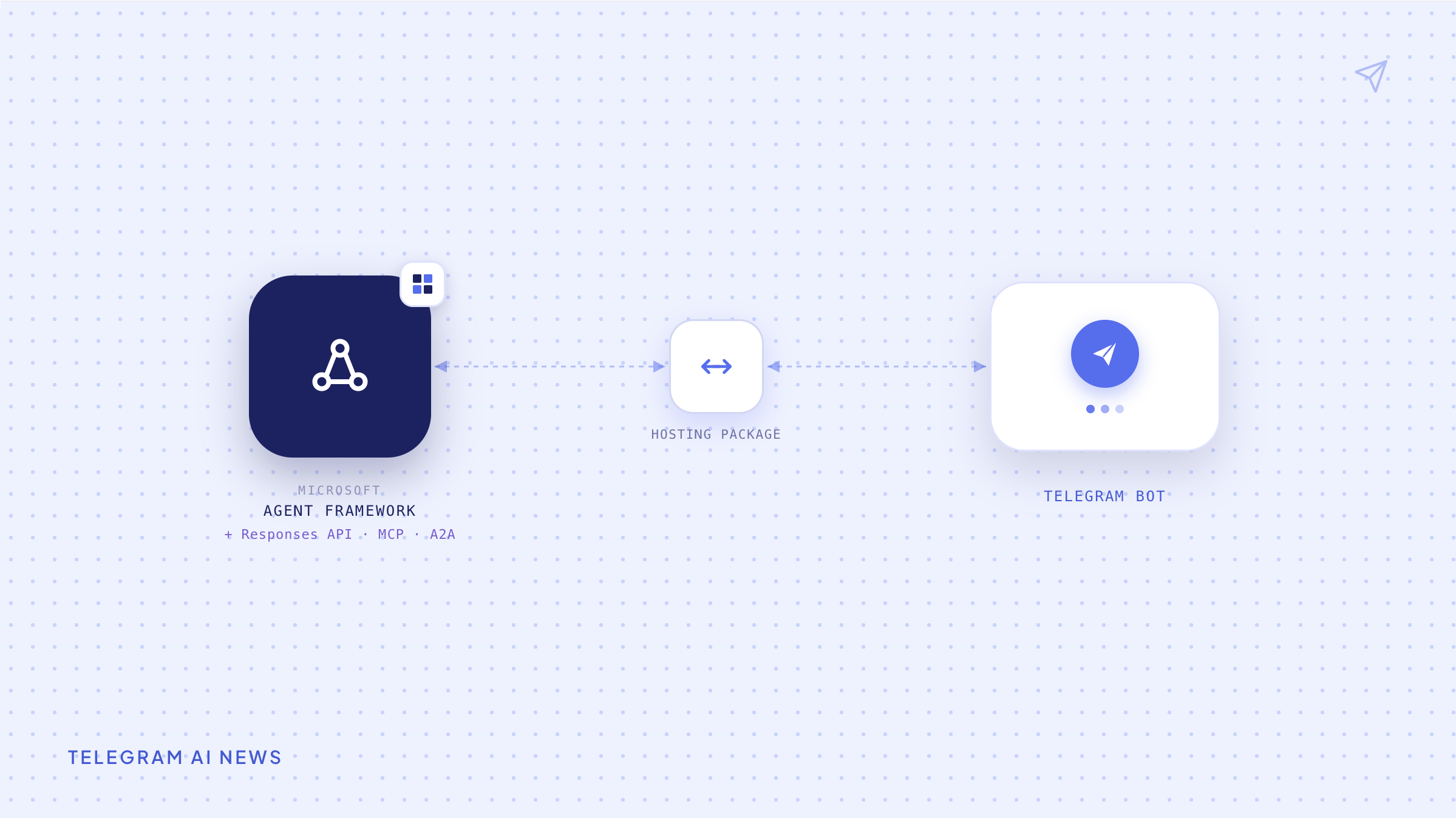
Microsoft has added Telegram support to its Agent Framework, giving developers a more direct way to connect AI agents and multi-step workflows to Telegram bots.
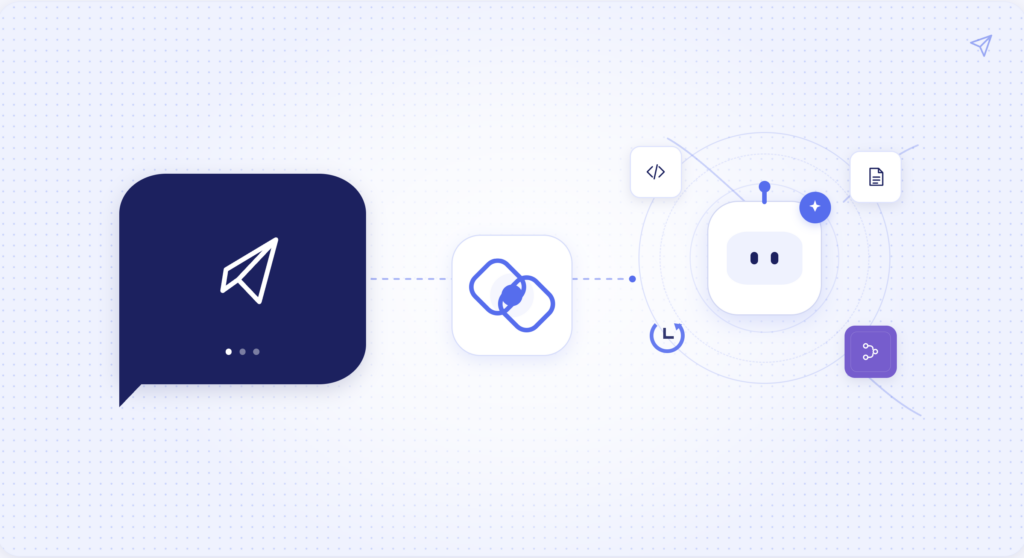
The new integration is part of Microsoft’s channels system, which lets one agent communicate through several interfaces without requiring developers to rebuild its underlying logic for each one. Alongside Telegram, the initial channel packages support OpenAI Responses, Agent-to-Agent communication and MCP tools.
What actually launched
The new agent-framework-hosting-telegram package converts incoming Telegram updates into input that Microsoft Agent Framework can process. It then translates completed or streaming agent responses back into operations that can be delivered through the Telegram Bot API.
Microsoft’s sample implementation supports polling and webhooks, streamed responses, media conversion, commands such as /new, per-chat message ordering and conversation continuity.
The same agent can also preserve a conversation across multiple interfaces if the developer maps those interfaces to the same authenticated user and session. In theory, someone could begin a task through an OpenAI-compatible application and continue it later from Telegram without starting over.
That cross-channel memory is optional, however, and implementing it safely remains the developer’s responsibility.
What Microsoft is and isn’t providing
This is not a hosted service that creates a finished Telegram AI bot with one click.
Microsoft provides the translation and session-management layer connecting its agent framework to Telegram. Developers must still configure the bot, run the application, handle authentication and authorization, choose where conversation history is stored, and decide which Telegram users can access the agent.
The current Python hosting packages are also marked as prerelease. That makes the integration more relevant to developers testing or building new products than to businesses expecting a completely managed production service.
Why it matters
Telegram has spent much of 2026 expanding what AI bots can do inside chats from streaming generated responses and communicating with other bots to sending rich and ephemeral messages.
Microsoft’s integration adds the other half of that equation: established AI-development platforms are now treating Telegram as a standard place to deploy agents.
This matters because the agent no longer needs to be built specifically for Telegram. A company could create one support, research or automation agent and expose it through Telegram alongside other applications, while keeping its core instructions, tools and workflows in one place.
It also reinforces a pattern visible in launches such as MoonPay’s MoonAgents integration: Telegram is increasingly being used as an access layer for agents that run on larger systems elsewhere.
For users, that should mean more capable agents appearing inside Telegram. For developers, it means less work connecting an existing agent to the messenger but no reduction in responsibility for permissions, identity and conversation security.